
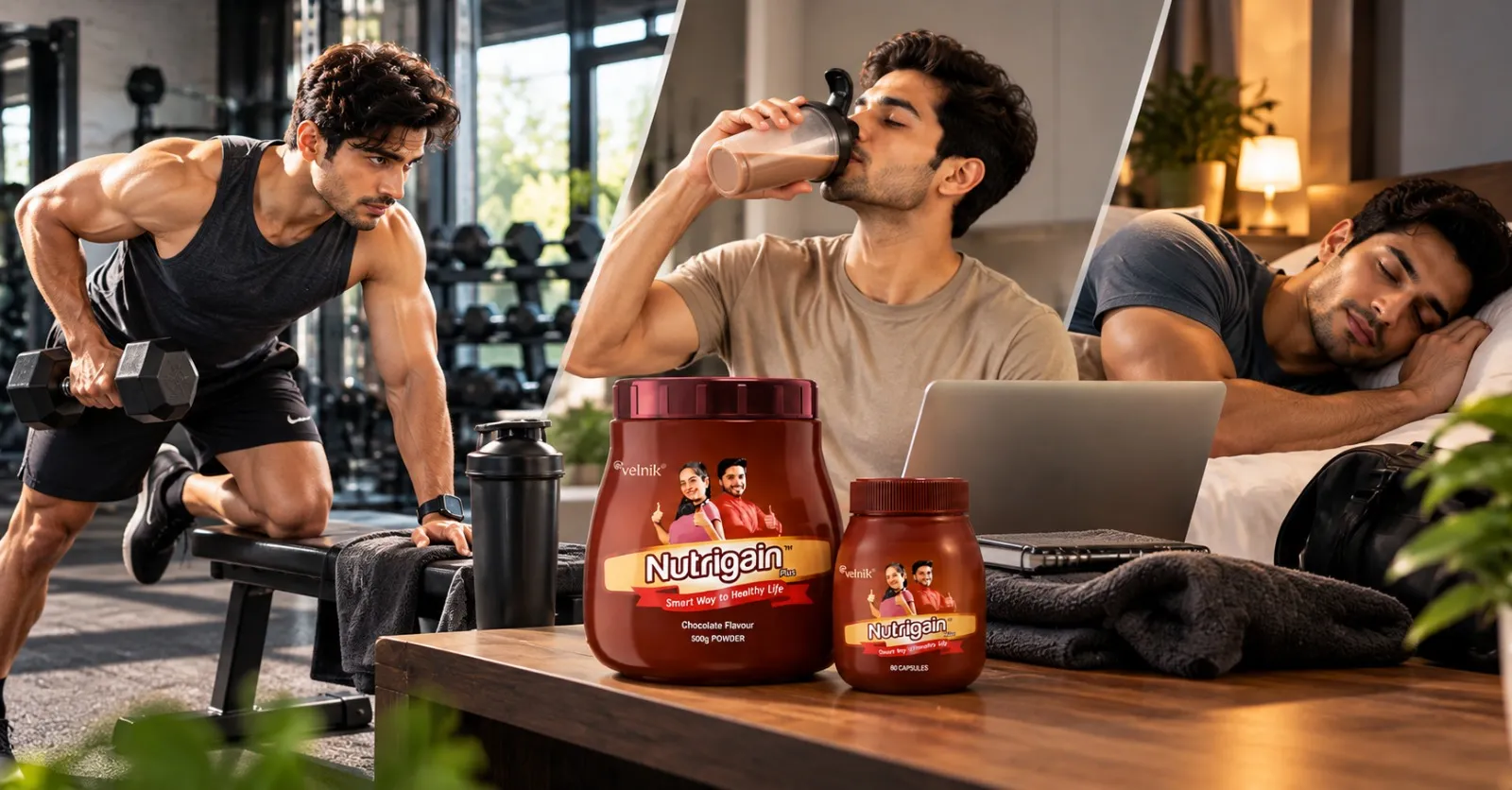
You finish your last set, put the weights back, grab your bottle and walk out of the gym feeling like the hard part is over.
But your body has a different schedule.
While you are thinking about your commute, dinner or tomorrow’s workout, your body is still dealing with what you just asked it to do. That makes the hours after training just as interesting as the workout itself.
And recovery does not have to mean turning your evening into a complicated wellness ritual. Sometimes, it is about getting the basics right: eating enough, staying hydrated, sleeping properly and giving your body enough time between demanding sessions. These are also among the fundamental areas highlighted in sports-recovery guidance from the American College of Sports Medicine.
So, what actually belongs in that space between “workout complete” and “ready for the next one”?
Let’s look at the everyday essentials that can make that part of your fitness routine work a little better.
In This Article:
- Don’t Pack Away Your Gym Bag Just Yet
- Give Your Body Something to Rebuild With
- When One More Meal Feels Like Too Much
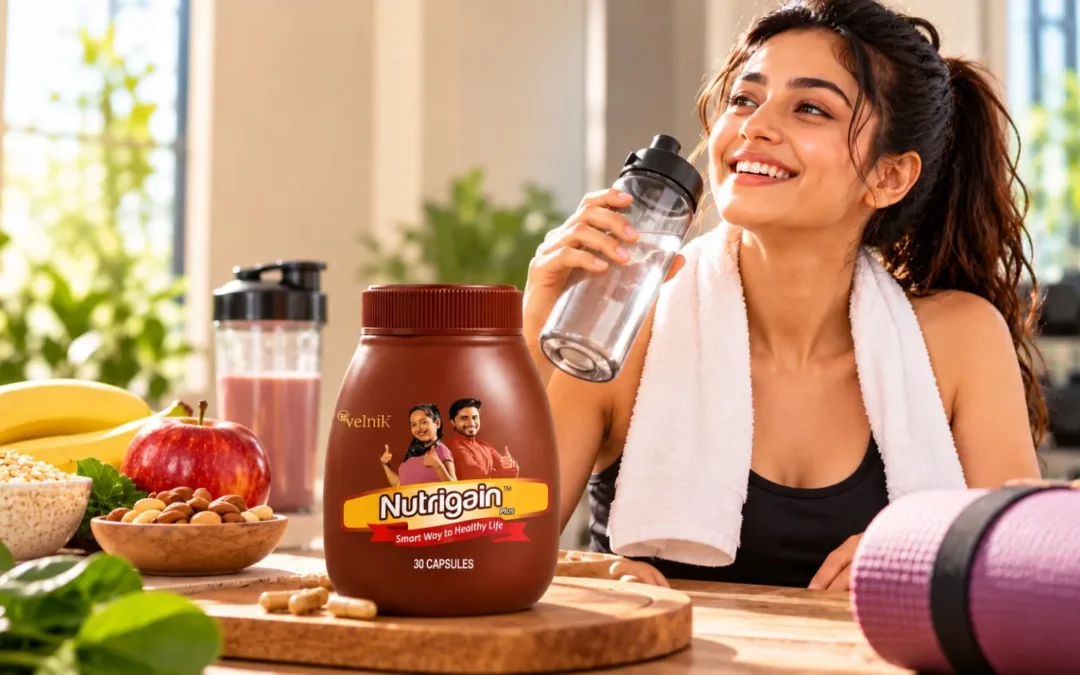
- Don’t Let Your Water Bottle Be Decorative
- Your Best Recovery Tool Might Be Your Pillow
- Keep Convenient Options for the Days That Go Sideways
- More Effort Isn’t Always More Progress
1. Don’t Pack Away Your Gym Bag Just Yet
There is a strange moment after a workout when you feel incredibly productive.
You trained. You sweated. You finished your final set. Done.
Except your body does not see it that way.
Training is the stimulus. What happens afterwards helps determine how well you recover before the next session. Nutrition, hydration, rest and sleep are considered core components of effective recovery.
That does not mean you need a 12-step recovery routine.
Start with what is sitting right in front of you.
Have something to eat. Drink some water. Change out of those sweaty clothes. Get on with your day. Then, when evening comes, give yourself permission to actually rest.
Recovery does not need to look impressive to be useful.
2. Give Your Body Something to Rebuild With
Think about a construction site.
You can send the workers in every morning, but if there are no materials arriving, eventually there is only so much they can do.
Your body needs its own version of building materials.
If you are training regularly and trying to gain weight or build muscle, your overall diet needs to provide enough energy and nutrients. Protein contributes to muscle tissue maintenance and repair, while carbohydrates are an important source of energy for exercise.
That does not mean every meal needs to look like a fitness influencer’s lunch.
A bowl of rice with a protein source. Eggs and toast. Yogurt with fruit and nuts. Dal with roti. A smoothie when you are short on time.
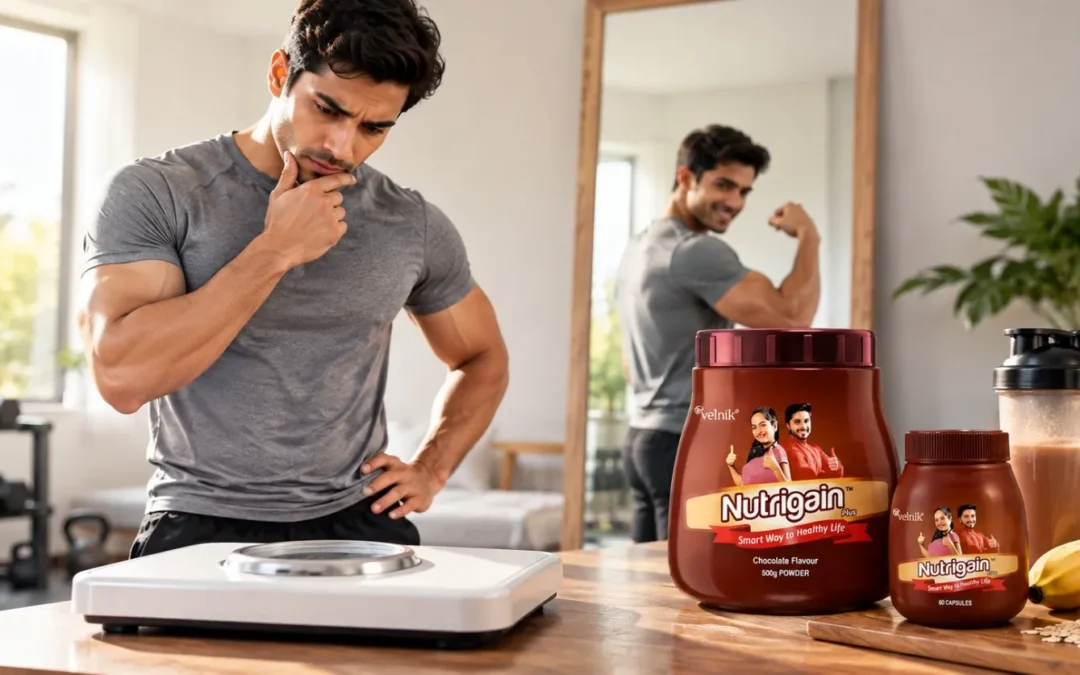
And when increasing your overall intake through regular meals feels difficult, an ayurvedic weight gain powder can be considered as a convenient addition, depending on your dietary needs and preferences.
The important word is addition.
Your everyday meals still do the heavy lifting when it comes to dietary variety.
3. When One More Meal Feels Like Too Much
There is a point during a weight-gain journey when the phrase “Just eat more” becomes surprisingly unhelpful.
Because what does that actually mean?
Another enormous plate when you are already full?
Another meal squeezed between work and the gym?
For many people, spreading food across the day can feel much more manageable than trying to make every meal huge. The NHS recommends smaller meals more frequently, nutritious snacks between meals and adding calorie-dense ingredients such as nuts and seeds when trying to gain weight.
This is where smaller additions can become useful.
A yogurt between meals. Nuts in your bag. A smoothie after training. Something you can eat without needing to sit down for another full dinner.
A weight gain powder may also be considered when someone finds it difficult to meet their desired intake through meals alone.
And if you prefer something compact that does not require preparation, capsules for weight gain can be another convenient product format to consider.
The goal is not to make eating feel like another job.
It is to make your daily intake easier to manage.
4. Don’t Let Your Water Bottle Be Decorative
You know that water bottle that has been sitting beside your gym bag for three hours?
Yes. The one you brought to the gym and somehow barely touched.
Hydration is one of those things that seems incredibly basic until you realise how easy it is to overlook.
You do not need to turn every workout into a complicated hydration strategy. For ordinary training sessions, regular fluid intake is usually the starting point. But longer, harder or hotter sessions can create greater fluid needs.
The bigger lesson is to stop treating hydration as something that begins when your workout starts.
Drink throughout the day.
Bring water with you.
And after training, keep drinking rather than assuming the workout is finished simply because you have left the gym.
It is one of the least exciting parts of fitness—and one of the easiest to forget.
5. Your Best Recovery Tool Might Be Your Pillow
Let’s talk about the recovery tool nobody gets excited about buying.
Your bed.
It does not have a sleek package. It does not come with a scoop. There is no dramatic before-and-after photograph.
But sleep is a fundamental part of recovery. The CDC recommends that adults aged 18–60 get at least seven hours of sleep per night, while also noting that good-quality sleep supports health and helps the body repair itself.
And this is where the fitness routine gets slightly uncomfortable.
You can spend an hour training and another hour researching supplements, but if you are regularly sleeping too little, your recovery routine has a fairly obvious gap.
Try treating bedtime like you treat your workout.
Give it a place in your schedule.
Reduce the late-night scrolling. Keep your sleep and wake times reasonably consistent. And when your body is telling you it is tired, perhaps do not interpret that as a challenge to squeeze in another task.
Sometimes recovery means going to bed.
6. Keep Convenient Options for the Days That Go Sideways
Some days follow your fitness plan beautifully.
Others seem personally offended by it.
Your meeting runs late. You miss lunch. The gym is busier than usual. You get home hungry and realise there is nothing prepared.
This is when convenience becomes genuinely useful.
Having a muscle gain supplement available may be worth considering if it fits your dietary needs and helps you manage your overall intake on particularly busy days. A Natural Weight gainer supplement can similarly be considered as a convenient addition to an existing food routine.
But convenience should solve a problem—not create another one.
Look at the ingredients and nutritional information. Consider how it fits alongside your regular meals. Think about whether you actually need it or whether a normal snack would do the job.
The same principle applies to a powder to gain weight: convenience can be useful when food preparation or appetite becomes a practical obstacle, but it should sit alongside a varied diet rather than replace it.
Your routine should make life easier, not turn your kitchen counter into a supplement laboratory.
7. More Effort Isn’t Always More Progress
Fitness has a very convincing voice.
Do another set.
Train harder.
Eat more.
Take another supplement.
Don’t miss a day.
It can make rest feel like laziness and simplicity feel like you are not doing enough.
But your body does not award extra points for making everything complicated.
Recovery guidance from ACSM emphasises appropriate nutrition, hydration, rest and sleep as foundational strategies, while also noting that adequate time should be allowed between higher-intensity sessions involving the same muscle groups.
That means sometimes the smartest thing you can add to your routine is actually space.
Space between hard sessions.
Space for sleep.
Space for a proper meal.
Space to recover.
If you are considering a body building supplement, for example, it makes more sense to ask what role it serves within your existing nutrition and training routine rather than assuming another product automatically means better results.
The same goes for weight gain tablets.
A convenient format does not make something essential.
The question is always: What gap am I actually trying to fill?
If there is no gap, there may be nothing to add.
Takeaway
Your workout may last an hour, but your body’s recovery routine carries on long after you leave the gym.
That is why the everyday details matter.
The meal you almost skipped. The water you remembered to drink. The snack you packed before leaving home. The evening you chose sleep instead of another hour of scrolling. The rest day you almost felt guilty about taking.
None of these things looks particularly dramatic on its own.
Together, they become the part of your fitness routine that happens between workouts.
So before adding another complicated step, check the essentials first:
Are you eating enough? Are you staying hydrated? Are you sleeping enough? Are you giving your body time to recover?
Once those foundations are in place, convenient nutrition options can have a place where they genuinely make your routine easier.
Because the workout may start the process.
But recovery is where you give your body the chance to keep up with it.