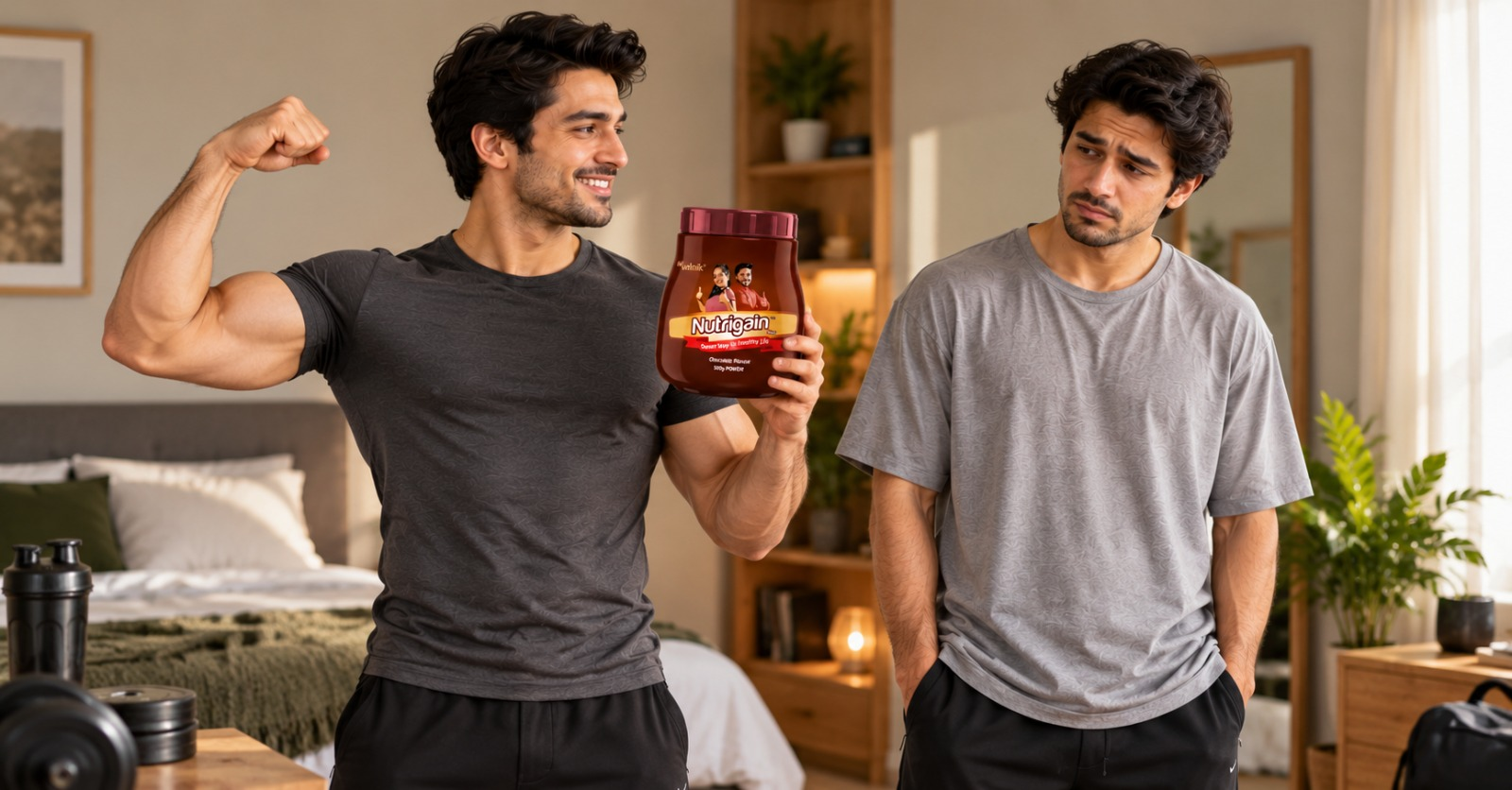
Have you ever borrowed your friend’s T-shirt because you both wear the same size, only to discover that it fits them perfectly but looks completely different on you?
Or ordered jeans online in your usual size, waited three days for delivery, and discovered that they fit your waist but feel painfully tight around your thighs?
And then there’s the classic shopping problem: the medium is too tight, but the large looks like you’ve borrowed someone else’s clothes.
Confusing, right?
Here’s the thing: two people can weigh exactly the same and still wear completely different clothing sizes.
Their shoulder widths, waist measurements, hip proportions, and muscle distribution can all be different. Add inconsistent sizing across clothing brands, and finding the right fit becomes even more complicated.
So, why does this happen? And does your clothing size actually tell you anything about your body?
Let’s break it down.
1. The Friend Who Weighs the Same as You but Wears a Completely Different Size
You and your friend weigh 65 kg. You have similar heights, eat together regularly, and even follow similar workout routines.
Your friend buys medium-sized shirts. You need a large because the shoulders feel tight, even though the waist fits perfectly in a medium.
Who has the wrong size?
Neither of you.
Your friend might have narrower shoulders and a different chest measurement. You might have broader shoulders, more developed upper-body muscles, or different body proportions.
The scale cannot reveal any of these differences. It only tells you your total body weight.
Muscle, body fat, bones, organs, and water all contribute to that number. Two people can have the same total weight while having different amounts and distributions of these tissues.
Their natural skeletal structure can also differ.
The number on your scale describes your weight. It doesn’t describe the shape of your body.
And this becomes even more obvious when you start shopping for clothes that need to fit several parts of your body at once.
2. Why Do Your Jeans Fit in the Changing Room but Feel Tight When You Sit Down?
You know those jeans that look perfect when you’re standing in front of the mirror?
The waist fits. The length is right. You check yourself from the front and the side, decide they’re worth buying, and take them home.
Then you sit down.
Suddenly, the waistband feels uncomfortable, the thighs pull against the fabric, or you find yourself adjusting the jeans every few minutes.
It’s frustrating because you didn’t gain weight between the changing room and your desk.
The problem may be the cut of the jeans.
Trousers have to accommodate your waist, hips, thighs, and rise. If the proportions of the garment don’t match your body, one area may fit comfortably while another feels restrictive.
Someone with fuller thighs might find that an athletic or relaxed cut offers more room. Someone with narrower hips may find that the same design feels loose in the wrong places.
The same issue occurs with shirts. A shirt can fit your chest but pull across your shoulders, or fit your shoulders while leaving too much fabric around your waist.
Next time you try on clothes, notice where they don’t fit. That tells you much more than the size printed on the label.
3. Why Your Usual Size Changes From One Brand to Another
You know your usual size. You’ve worn it for years.
So when you order a medium online, you don’t think twice about it.
Then the parcel arrives, you try the garment on, and it feels more like a small.
You check the label. It says medium.
What happened?
Different brands use different patterns, measurements, and sizing conventions. A medium-sized T-shirt from one brand may have a wider chest and longer sleeves than a medium from another.
Even within one brand, slim-fit, regular-fit, and oversized clothing are designed to sit differently.
Fabric matters, too. Stretch denim may feel more forgiving than rigid denim, while a structured jacket behaves differently from a soft sweatshirt.
If you regularly shop online, save the measurements of garments that fit you well. Compare them with the size chart for the item you’re buying rather than relying only on the label.
Your body hasn’t necessarily changed. You may simply be dealing with a different sizing system.
4. You Haven’t Gained Weight, but Your Favourite Shirt Feels Different
You put on a shirt that fitted comfortably a few months ago. Now it feels tighter around the shoulders, chest, or arms.
You step on the scale. Your weight is almost unchanged.
So why does the shirt feel different?
If you’ve been strength training, changes in muscle development may affect how clothing fits around particular areas, even without a large change in overall body weight.
Your weight can remain relatively stable while your body composition changes. Muscle and fat occupy different amounts of space for the same mass, and their distribution influences your measurements.
But don’t automatically assume you’ve gained muscle just because a shirt feels tighter. Fabric shrinkage, changes in elasticity, posture, and other factors can also affect fit.
If you’ve been working towards a fitness goal, compare your measurements under similar conditions and look at your training progress over time.
A change in clothing fit can be a useful observation, but it cannot tell you precisely what has changed in your body.
5. Can a Muscle Gain Powder Change the Way Your Clothes Fit?
If you’ve started working out and want your clothes to fit differently, you might expect your body weight to increase before noticing any other changes.
But building muscle and gaining overall weight aren’t exactly the same thing.
Your body composition can change while your weight stays relatively stable. Alternatively, your weight may increase without a corresponding increase in muscle mass.
If your goal is to build muscle, resistance training, sufficient nutrition, and recovery all play important roles.
A muscle gain powder may provide protein or additional calories, depending on its formulation. It can be convenient if your regular meals don’t provide enough of what you need.
However, taking a powder doesn’t guarantee that your shoulders, chest, or arms will grow. Your results depend on your overall diet, training, and individual response.
Some people also consider a body building supplement to support their fitness goals. However, the usefulness of any supplement depends on its ingredients, your nutritional requirements, and the evidence supporting its intended use.
Before purchasing a product, check its ingredients, protein content, calories, serving size, and quality information.
Also remember that clothing fit isn’t a precise measure of muscle growth. Track your training performance and body measurements alongside your weight if you want a clearer picture of your progress.
6. When a Weight Gain Supplement Makes Sense for Your Goals
Some people have a different experience with clothing.
Their shirts feel loose around the shoulders, their trousers don’t sit as expected, and they want to gain weight because they’re naturally slim.
If this sounds familiar, the first step is to understand your eating habits and whether your current calorie intake supports your goal.
A muscle gain supplement may be useful if you consistently struggle to consume enough calories through ordinary meals.
However, you don’t necessarily need one. Foods such as oats, milk, rice, nuts, peanut butter, eggs, lentils, and other protein-rich options can help you meet your nutritional needs.
If you do choose a supplement, consider its ingredients, nutritional value, and suitability for your diet rather than relying on promises of rapid results.
The objective is to support gradual, appropriate weight gain—not to reach a particular clothing size as quickly as possible.
If you’re struggling to gain weight despite eating consistently, or you’re losing weight without trying, consult a healthcare professional to investigate possible underlying causes.
7. Are Weight Gainer Capsules Really Necessary?
When you search online for ways to gain weight, you’ll find products marketed as weight gainer capsules alongside powders, shakes, and other supplements.
Capsules can sound convenient, particularly if you don’t enjoy drinking shakes or preparing additional meals.
But convenience doesn’t establish effectiveness.
Different capsules contain different ingredients, and their benefits depend on what they contain and whether there is reliable evidence supporting their intended use.
Some people also come across weight gain tablets while researching ways to increase their body weight. However, these products can contain very different ingredients, and their effectiveness and safety depend on the specific formulation.
Some products may supply vitamins or minerals, while others contain herbal ingredients or other substances. Correcting a nutritional deficiency can be beneficial, but taking extra nutrients when you already get enough doesn’t automatically increase body weight or muscle mass.
Be cautious of products promising dramatic changes without dietary adjustments or exercise. Check the ingredients, quality information, and safety considerations before using them.
If you’re unsure whether a product is appropriate for you, speak with a qualified healthcare professional.
Your money is better spent addressing a genuine nutritional need than buying something simply because its packaging promises a bigger physique.
8. Is a Natural Weight Gainer Supplement Better Than Regular Food?
The word natural can make a product sound like an obvious choice.
But a natural weight gainer supplement isn’t automatically more effective or safer than other nutritional products.
What matters is its actual composition, manufacturing quality, nutritional contribution, and the evidence behind its claims.
If you’re trying to increase your calorie intake, ordinary foods may already offer a practical solution. A smoothie made with milk or a suitable alternative, oats, banana, and peanut butter can provide additional energy, depending on the ingredients and quantities.
If you’re searching for powder to gain weight, consider whether it genuinely helps you meet your nutritional needs. A suitable powder may be convenient when your appetite, schedule, or dietary requirements make it difficult to consume enough through regular meals.
Before choosing one, check whether it solves a real problem in your diet.
And don’t expect any product to determine where your body gains weight. Your individual body composition and response to nutrition and training influence how your measurements change.
9. What About Ayurvedic Weight Gain Powder?
Some people prefer traditional formulations when exploring nutritional products.
An ayurvedic weight gain powder may appeal to those interested in herbal ingredients, but the label alone doesn’t establish that a product will increase appetite, body weight, or muscle mass.
Formulations vary, and evidence for one ingredient cannot automatically be applied to every product sold under the same category.
Check the complete ingredient list, manufacturing standards, and available evidence. Some herbal ingredients can interact with medicines, and poorly controlled products may contain harmful contaminants.
If you’re considering a traditional formulation, consult a qualified healthcare professional who can help you assess whether it’s suitable for your circumstances.
Most importantly, don’t use a supplement to ignore persistent appetite problems or unexplained weight loss.
The right approach should support your health, not simply change the number on a scale or the size on a clothing label.
10. Why Your Wardrobe Contains Three Different Sizes
Take a look at your wardrobe.
You might own small-sized T-shirts, medium-sized shirts, and large-sized jackets. Perhaps your jeans are one size in one brand and another size elsewhere.
That doesn’t automatically mean your body is inconsistent.
Different garments are designed for different purposes, and brands use different measurements.
A jacket needs enough room for movement and possibly other layers underneath. A fitted shirt sits closer to the body. Jeans must accommodate your waist, hips, and legs.
Expecting all these garments to fit perfectly in the same size is unrealistic.
When shopping, check the measurements relevant to the garment. For tops, look at the chest, shoulders, and length. For trousers, pay attention to the waist, hips, thighs, and inseam.
If an item fits well everywhere except one area, consider whether a different cut or a minor alteration would work better.
And remember that a size label is not a score. There is no advantage to squeezing into a smaller size if a different one fits more comfortably.
So, Should You Trust the Scale or Your Clothing Size?
Neither tells the whole story.
Your scale measures total body weight. Clothing sizes categorise garments according to a manufacturer’s sizing system. Neither one describes every aspect of your body or determines how healthy you are.
Two people with the same weight can have different body measurements. Two people with similar measurements can prefer different fits. And two garments with the same label can still fit differently.
The next time your usual size doesn’t fit, you don’t need to assume that something has changed about your body.
Check the garment, its cut, its fabric, and the measurements it was designed to accommodate.
The best-fitting clothes aren’t the ones that match a number you’ve memorised. They’re the ones that fit your actual body comfortably.