

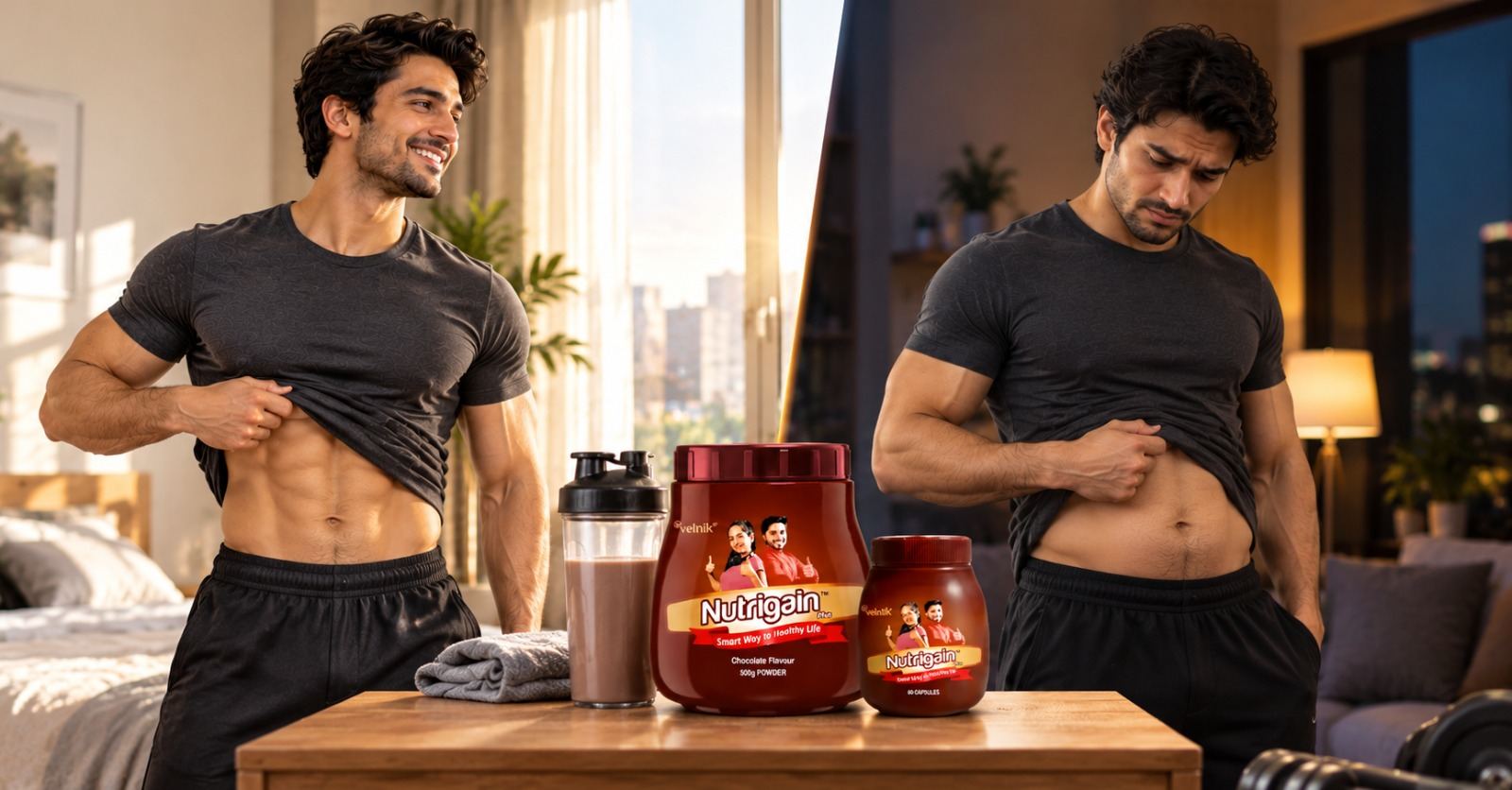
Your stomach looks flatter at 8 AM, your jeans feel tighter by 8 PM, and the scale shows a different number. Did your body really change that much in 12 hours? The answer lies in what happens between your first morning glance in the mirror and your last meal of the day.
Your Body Doesn’t Keep the Same Shape All Day
At 8 AM, you’ve spent several hours sleeping without eating or drinking. By 8 PM, you’ve had meals, snacks, water, and an entire day of movement. Your digestive system contains different amounts of food and fluid, and your body has been regulating its water balance throughout the day.
These changes can influence your weight, waistline, and overall appearance.
The important distinction is that a change in appearance over several hours isn’t the same as a change in body composition. A fuller stomach after dinner doesn’t automatically mean you’ve gained fat, just as a flatter stomach in the morning doesn’t prove you’ve lost it.
Understanding that difference can change how you interpret your reflection.
Why Your Stomach Looks Flatter Before Breakfast
Your morning stomach often looks different because your digestive system is in a different state from the one it will be in after several meals.
During the night, you haven’t been consuming food or drinks. Your body continues its normal processes, including breathing, perspiration, and digestion. By morning, there is generally less recently consumed food and fluid in your digestive tract than there will be later in the day.
After breakfast and lunch, that changes.
Food takes time to move through your digestive system. Depending on the meal, your digestion, and your individual physiology, your abdomen may look fuller as the day progresses.
This is particularly noticeable if you experience bloating or gas. Some carbohydrates produce gas when bacteria in the large intestine break them down, while eating quickly or experiencing constipation can also contribute to abdominal distension.
If your stomach looks flatter before breakfast, don’t assume you’ve burned a significant amount of fat overnight. Your appearance may simply reflect the timing of your last meal and the current state of your digestion.
The Lunch Effect: Why Your Waistline Changes After Eating
Consider two afternoons.
On the first, you eat a light lunch and feel comfortable for the rest of the day. On the second, you eat a larger meal, drink more fluid, and notice that your stomach feels fuller by mid-afternoon.
The difference doesn’t necessarily mean that one meal caused fat gain.
Your digestive system needs time to process what you eat. Gas, constipation, eating quickly, and sensitivity to particular foods can also contribute to abdominal distension.
If you frequently experience bloating, pay attention to whether certain foods, meal sizes, or eating habits seem to trigger it. Avoid eliminating entire food groups without a clear reason, and seek medical advice if symptoms persist, worsen, or become painful.
Your stomach doesn’t need to remain flat after every meal for your body to be functioning normally.
Why the Scale Shows a Higher Number at Night
You weigh yourself at 8 AM and see 60 kg. Later that evening, the scale reads 60.8 kg.
It’s tempting to think that you’ve gained weight because something went wrong with your diet.
But the scale measures your total body mass at that moment, not just your body fat.
Food and drinks contribute to your weight while they’re in your system. Changes in hydration, sodium intake, carbohydrate intake, physical activity, and hormonal fluctuations can also influence the amount of water your body retains.
That means your evening weight can be higher without a comparable increase in body fat.
If you’re tracking your weight, compare readings taken under similar conditions. Weighing yourself in the morning, after using the bathroom and before eating or drinking, can provide a more consistent reference point.
What matters most is the longer-term pattern, not a single number recorded at the end of the day.
Why Your Face and Fingers Can Look Different, Too
Your waistline isn’t the only part of your body affected by daily changes.
Some people notice puffiness around their eyes or cheeks. Others find that their rings feel tighter or that their ankles look more swollen after spending a long time sitting or standing.
Fluid distribution, sodium intake, sleep, hormonal changes, and individual physiology can all influence how your body looks and feels.
However, don’t assume that every change in appearance is simply water retention. Persistent or unexplained swelling should be assessed by a healthcare professional. Sudden swelling involving the lips or tongue, especially with difficulty breathing, requires emergency care.
And don’t try to correct ordinary puffiness by deliberately drinking less water. Adequate hydration remains important for normal bodily functions.
Why Your Arms Look Bigger After a Workout
Have you ever noticed that your arms look fuller immediately after training but less defined the next morning?
This temporary effect is commonly known as a muscle pump. Exercise increases blood flow to working muscles and causes temporary fluid shifts that can change their appearance.
It can make your arms look more pronounced for a while, but it isn’t the same as lasting muscle growth.
Building muscle takes time and depends on consistent resistance training, adequate nutrition, recovery, and individual factors.
If you’re working towards a more muscular physique, avoid judging your progress by comparing a post-workout photograph with one taken on a rest day. Instead, use consistent photographs, measurements, and training records to assess changes over several weeks or months.
Does Looking Leaner in the Morning Mean You’re Burning More Fat?
Not necessarily.
Your body uses energy throughout the day, including while you sleep. However, a flatter stomach in the morning doesn’t establish how much fat you’ve lost.
Short-term differences in appearance are often influenced by digestive contents and fluid balance. Meaningful changes in body composition are better assessed over time.
The same applies to exercise timing. Training in the morning may suit your schedule, while someone else may perform better in the evening. There is no universal rule that exercising at a particular hour guarantees a better physique.
Choose a routine you can maintain and evaluate your results over time rather than assuming that the time on the clock determines your progress.
Trying to Gain Weight? Look Beyond Your Evening Scale Reading
People trying to gain weight can experience the same uncertainty as those trying to lose it.
You follow your eating plan, see a higher number on the scale in the evening, and feel encouraged. The following morning, the number drops again.
That doesn’t necessarily mean your plan has failed. Daily weight changes can reflect food, fluid, and digestive contents rather than changes in muscle or fat.
If you’re consistently struggling to consume enough calories, a suitable muscle gain supplement may help you meet your nutritional requirements. However, it should complement a balanced eating plan rather than be used to chase daily fluctuations.
A Natural Weight gainer supplement may appeal to people who prefer particular ingredients, but the word “natural” doesn’t guarantee effectiveness or safety.
Before choosing any product, consider whether it addresses a genuine nutritional need and check its ingredients, quality, and suitability for you.
Can Weight Gainer Capsules Help You Reach Your Goals?
When regular meals aren’t enough to meet your nutritional requirements, you may come across products marketed as weight gainer capsules.
These products vary considerably in their ingredients and intended uses. Some contain vitamins, minerals, or herbal ingredients, but taking a capsule doesn’t automatically lead to weight gain or muscle development.
Correcting a genuine nutrient deficiency can be beneficial. However, extra nutrients won’t necessarily produce additional muscle if your nutritional needs are already being met.
Be cautious of products promising rapid results or providing unclear ingredient information. Check quality and safety information, and consult a qualified healthcare professional if you’re uncertain about potential side effects or interactions with medication.
Is Powder to Gain Weight Necessary for Muscle Growth?
A powder to gain weight can provide a convenient source of additional calories when you’re struggling to eat enough through regular meals.
For example, someone with a small appetite or a busy schedule may find a nutritious shake easier to consume than another full meal.
However, powders aren’t compulsory for gaining weight. Ordinary foods can also provide the calories, protein, carbohydrates, and fats your body needs.
If you’re considering a powder, look at its calorie content, protein, serving size, sugar content, and ingredient list. Compare it with your existing diet before deciding whether it’s worthwhile.
The objective is to support your nutritional needs, not to increase your weight as quickly as possible.
What to Know Before Choosing Muscle Gain Powder
A muscle gain powder may contain protein, carbohydrates, or a combination of nutrients, depending on the formulation.
It can be useful if it helps you meet a specific nutritional requirement, but it cannot guarantee muscle growth on its own.
Muscle development depends on an appropriate resistance-training programme, adequate nutrition, recovery, and consistency. A shake won’t compensate for a programme that doesn’t challenge your muscles effectively.
If your diet already provides enough calories and protein, additional powder may not be necessary. Choose products based on their actual ingredients and nutritional contribution rather than exaggerated marketing claims.
And remember that the fuller appearance you see immediately after a workout isn’t proof that a supplement has produced lasting changes.
Are Weight Gain Tablets or Ayurvedic Weight Gain Powder Worth Considering?
Products marketed as weight gain tablets and ayurvedic weight gain powder may appeal to people looking for alternatives to conventional nutrition products.
However, their ingredients, quality, and evidence of effectiveness vary.
Traditional or herbal labelling doesn’t automatically establish that a product is safe or that it will increase your body weight. Some herbal ingredients can interact with medicines, and poor manufacturing controls may introduce contaminants.
Before using one, look for transparent ingredient information, reliable quality controls, and credible evidence supporting its intended use. Seek professional advice if you have an existing medical condition, take medication, or struggle to gain weight despite adequate food intake.
The most appropriate option depends on your nutritional needs and circumstances—not simply on whether a product is marketed as natural or traditional.
How to Track Your Body Without Getting Misled
If you want to understand whether your body is changing over time, consistency is more useful than repeatedly checking your reflection.
- For body weight: Weigh yourself under similar conditions and look at the trend over several weeks.
- For waist measurements: Measure at the same location and under comparable conditions.
- For muscle development: Compare photographs taken with similar lighting, posture, and camera angles.
- For bloating: Notice whether it follows particular meals or comes with other digestive symptoms.
You don’t need to measure your body every few hours. Choose the measurements that suit your goal and review them at sensible intervals.
If tracking weight or appearance becomes stressful or starts affecting your eating habits, consider stepping back from frequent measurements and seeking appropriate support.
When Daily Changes Deserve Medical Attention
Most ordinary fluctuations in appearance and weight are related to everyday processes, but not every change should be dismissed.
Speak with a healthcare professional if you experience persistent or worsening bloating, unexplained weight changes, ongoing swelling, or symptoms that interfere with daily life. Sudden, severe symptoms may require urgent assessment.
The timing of a change can provide useful context, but it cannot establish the cause on its own.
Your 8 AM Body and 8 PM Body Aren’t in Competition
Your morning appearance reflects one point in your day. Your evening appearance reflects another.
Between those moments, you’ve eaten, drunk, digested, moved, and regulated your body’s fluids. Your stomach may be fuller, your weight may be higher, and your muscles may look different.
Those changes don’t automatically mean you’ve gained fat or lost progress.
Instead of asking why your body doesn’t look the same all day, ask whether anything meaningful has changed over time.
That question will tell you far more about your health and fitness than comparing your reflection before breakfast with the one you see after dinner.